What Factors Affect Die Casting Mold Tooling Cost? A Complete B2B Manufacturing & Engineering Guide
Navigating the procurement and custom development of a Die Casting Mold requires a clear understanding of its cost structure. For purchasing managers, design engineers, and global manufacturers, tooling represents a substantial upfront capital investment. Understanding what factors affect die casting mold tooling cost helps businesses optimize designs, control production budgets, shorten delivery cycles, and maximize mold lifespan.
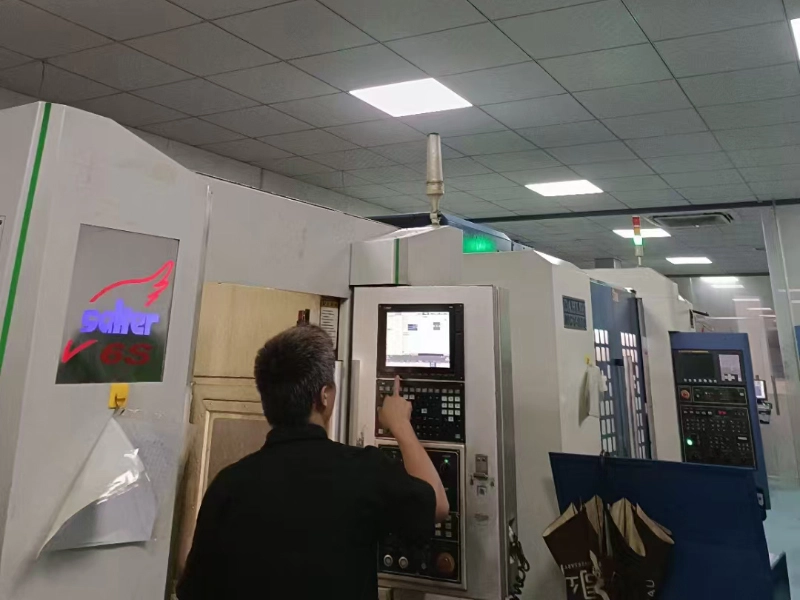
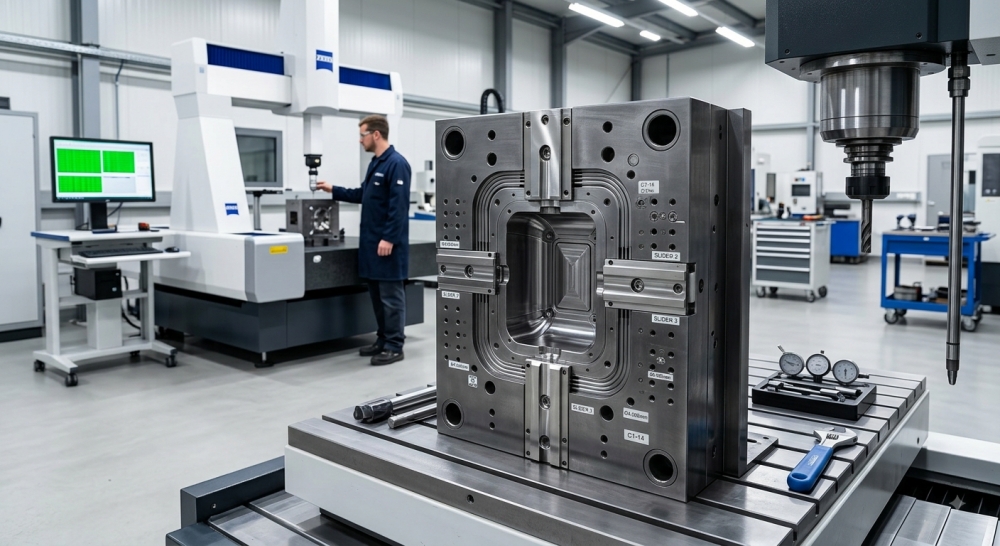
At Dongguan Hairong Mould Technology Co., Ltd., we specialize in high-precision mold components, custom inserts, precision mold cores, slide assemblies, cores, and cavities. Maintaining concentricity, roundness, and verticality within 0.003mm, our advanced manufacturing technologies—including Mazak and American CNC lathes, Sodick mirror EDM machines, Mitsubishi wire EDM, and German Zeiss 3D CMM inspection systems—allow us to deliver unmatched durability and precision for custom mold development.
In this guide, we break down every primary factor influencing die casting mold tooling costs, providing actionable insights to help you reduce manufacturing costs without sacrificing quality or performance.
Table of Contents
- 1. Tooling Material Selection & Mold Steel Grade
- 2. Part Complexity, Geometry, and Internal Features
- 3. Single-Cavity vs. Multi-Cavity Die Casting Mold Configurations
- 4. Precision Tolerances and Internal Mold Components
- 5. Surface Finishing, Texturing, and Mold Coatings
- 6. Mold Life Expectancy and Shot Capacity Requirements
- 7. Cooling Channel Design and Thermal Management Systems
- 8. Comprehensive Die Casting Mold Tooling Cost Breakdown Table
- 9. How Hairong Mould Technology Optimizes Die Casting Mold Tooling Costs
- 10. Frequently Asked Questions (FAQ)
1. Tooling Material Selection & Mold Steel Grade for Your Die Casting Mold
The choice of raw steel for the mold frame, core, cavity, and sliding components is one of the single largest variables affecting the overall die casting mold cost. Because die casting involves molten metals (such as aluminum, zinc, or magnesium) injected under extreme pressure and elevated temperatures (often exceeding 600°C/1100°F for aluminum), mold steel must withstand thermal shock, severe pressure, and erosion.
Standard Tool Steels vs. Premium Hot-Work Tool Steels
Lower-cost steel alloys like P20 or NAK80 are suitable for low-volume production or prototype tooling. However, high-volume production requires premium hot-work tool steels such as H13, 1.2344, SKD61, or premium ESR (Electro-Slag Remelted) steel grades. While premium steels increase initial material costs by 30% to 100%, they significantly extend mold life and prevent thermal fatigue cracking (heat checking).
Below is a comparative overview of common steel materials used in mold manufacturing:
| Steel Grade | Thermal Resistance | Machinability | Typical Shot Life | Cost Level |
|---|---|---|---|---|
| P20 Steel | Moderate | High | 10,000 – 30,000 shots | Low |
| H13 / SKD61 | High | Medium | 100,000 – 150,000 shots | Medium – High |
| 1.2344 ESR | Very High | Medium | 150,000 – 300,000+ shots | High |
| Premium Die Steel (Dievar) | Exceptional | Challenging | 300,000 – 500,000+ shots | Very High |
2. Part Complexity, Geometry, and Internal Features in Die Casting Mold Design
A simple geometric component with a straight pull open-and-close design requires far less engineering and machining effort than a complex housing featuring internal threads, deep undercuts, thin walls, and fine aesthetic details.
Side Actions, Hydraulic Sliders, and Lifters
When a cast part contains undercuts or side holes that prevent straight ejection, the die casting mold must incorporate side actions, mechanical sliders, angle pins, or hydraulic core pulls. Each dynamic slider increases tooling assembly complexity, precision fitting labor, and machining time on high-precision EDM (Electrical Discharge Machining) and CNC wire cutting equipment.
Wall Thickness and Draft Angles
Non-uniform wall thickness leads to uneven thermal contraction, sink marks, and internal porosity. Incorporating generous draft angles (typically 1.5° to 3° or higher) reduces friction during part ejection, prevents surface scarring, and minimizes the wear on internal core pins and cavity walls, lowering maintenance costs over time.
3. Single-Cavity vs. Multi-Cavity Die Casting Mold Configurations
Determining whether to build a single-cavity or multi-cavity die casting mold directly dictates initial tooling costs versus long-term unit production costs.
Single-Cavity Molds
Single-cavity tooling produces one part per casting cycle. It features smaller mold bases, simpler runner systems, and lower initial development costs. This configuration is ideal for low-to-medium annual volumes, prototype testing, or large industrial components.
Multi-Cavity and Family Molds
Multi-cavity tooling produces 2, 4, 8, or more identical parts per shot, dramatically cutting unit cycle time and unit cost. However, multi-cavity designs demand larger mold bases, balanced thermal runner systems, complex gating, and meticulous alignment across every cavity. A 4-cavity mold may increase initial tooling cost by 60% to 120% compared to a single-cavity mold, but it drastically reduces total unit cost for high-volume manufacturing runs.
4. Precision Tolerances and Internal Die Casting Mold Components
The internal mechanics of a die casting mold—including core pins, inserts, slider guide rails, ejector sleeves, and main cavities—require micro-level precision to perform reliably under high-pressure molten metal injection without flashing.
Sub-Micron Machining and Custom Mold Inserts
Standard mold components with tolerances around ±0.01mm are sufficient for basic structural castings. However, high-precision applications—such as medical devices, daily chemical packaging, and optical instruments—demand critical component tolerances maintained within 0.003mm for concentricity, roundness, and verticality.
At Dongguan Hairong Mould Technology Co., Ltd., we utilize specialized imported machinery including Sodick mirror spark EDM, Mitsubishi wire cutting, Mazak CNC lathes, cylindrical grinders, and German Zeiss 3D CMM inspection tools. High-precision tooling components eliminate flashing, ensure perfect mold shut-offs, and reduce scrap rates, offsetting upfront tooling costs with superior production yields.
5. Surface Finishing, Texturing, and Protective Coatings for Die Casting Mold Tooling
Surface treatment requirements on the finished cast part directly dictate the surface preparation needed inside the die casting mold cavity.
- Standard Machined Finish (SPI D2/D3): Minimal polishing required; ideal for structural components where aesthetics are secondary.
- High Polish & Mirror Polishing (SPI A2/A1): Demands extensive manual mirror polishing, often utilizing mirror EDM. Essential for decorative or highly reflective parts.
- Laser Etching & Texturing: Creates custom grain patterns, leather textures, or matte finishes inside the mold cavity.
- PVD Coatings & Nitriding: Surface treatments like Titanium Nitride (TiN), CrN, or gas nitriding harden cavity surfaces to resist thermal fatigue, solder erosion, and abrasive wear, adding initial cost while extending mold life.
6. Mold Life Expectancy and Shot Capacity Requirements for Die Casting Molds
Before designing a die casting mold, defining the target production volume is critical. Molds are classified into standardized SPI tooling classes based on expected lifespan:
Class 101 Tooling (1,000,000+ Cycles)
Built for maximum high-volume production using top-grade hardened tool steel (HRC 48-52+), fully guided ejection, hardened steel wear plates, and replaceable inserts for every high-wear area. This represents the highest initial investment but yields the lowest per-part mold cost over large production runs.
Class 103 Tooling (Under 100,000 Cycles)
Designed for moderate production volumes using pre-hardened steel. Tooling costs are lower, but cavity replacement and maintenance will be required if production extends past initial targets.
7. Cooling Channel Design and Thermal Management Systems in Die Casting Molds
Efficient thermal management is essential in die casting to solidify molten metal rapidly and evenly. Poorly planned cooling leads to long cycle times, warped parts, internal voids, and early heat checking on the mold surface.
Conformal Cooling vs. Standard Drilled Cooling Lines
Traditional cooling lines are straight drilled holes, which may fail to reach complex core geometry or deep cavity regions. Modern die casting mold designs leverage 3D-printed conformal cooling channels or specialized cooling inserts with high-conductivity copper alloys (such as beryllium copper or AMPCO metal). While advanced thermal systems increase initial tooling costs by 15% to 30%, they cut cycle times by 20% to 40% and substantially extend overall mold operational life.
8. Comprehensive Die Casting Mold Tooling Cost Breakdown Table
To summarize how design parameters dictate budgeting, review the cost impact matrix below for a custom die casting mold project:
| Cost Factor | Low Cost Driver | High Cost Driver | Impact on Overall Tooling Budget |
|---|---|---|---|
| Mold Steel Grade | P20 / NAK80 | H13 ESR / Premium Dievar | 15% – 30% of total mold cost |
| Cavity Count | Single Cavity (1×1) | Multi-Cavity (4×4, 8×8) | 25% – 50% increase per added cavity |
| Part Complexity & Action | Straight Pull / No Undercuts | Hydraulic Sliders / Lifters / Threads | 20% – 40% addition for dynamic mechanisms |
| Precision Tolerances | ±0.05 mm | Within 0.003 mm (High-Precision Core/Insert) | 15% – 35% impact due to ultra-precision machining |
| Surface Polish & Coating | As-Machined / SPI C-3 | SPI A-1 Mirror Polish + PVD Coating | 10% – 20% impact on cavity finishing labor |
9. How Hairong Mould Technology Optimizes Die Casting Mold Tooling Costs
At Dongguan Hairong Mould Technology Co., Ltd., we understand that exceptional tooling value requires balancing precision engineering with cost control. By leveraging advanced manufacturing equipment and decades of technical expertise, we deliver high-precision non-standard mold components that maximize your return on investment.
Our Advanced Technical Capabilities
- Sub-Micron Machining Precision: Concentricity, roundness, and verticality maintained within strict 0.003mm tolerances.
- High-End Machinery Fleet: Imported cylindrical grinders, punch grinders, Mazak and American CNC lathes, Sodick mirror EDM, and Mitsubishi wire cutting machines.
- Rigorous Inspection Standards: Comprehensive dimensional verification using German Zeiss 3D CMM, optical projectors, and 2D measurement instruments.
- Custom Component Manufacturing: Specializing in core pins, cavity inserts, thread cores, custom ejector sleeves, sliders, and non-standard plastic/hardware mold accessories.
Adhering to our core philosophy—“Professional Technology, Excellent Quality, Fast Delivery, and Service-Oriented”—we help global clients improve production efficiency while driving down mold operational costs.
10. Frequently Asked Questions (FAQ)
Q1: How long does it take to manufacture a custom die casting mold?
A1: Lead time for a custom die casting mold generally ranges from 4 to 8 weeks, depending on part size, mold cavity configuration, slider complexity, and steel hardening processes. Prototype or single-cavity tooling can sometimes be delivered in 3 to 4 weeks.
Q2: How can I lower my die casting mold tooling costs during the design phase?
A2: You can reduce costs by optimizing draft angles (minimum 1.5°-2°), keeping wall thicknesses uniform, eliminating unnecessary undercuts to reduce hydraulic sliders, and specifying standard tolerance zones where tight tolerances are not functionally required.
Q3: What causes a die casting mold to fail prematurely?
A3: Premature mold failure is usually caused by thermal fatigue (heat checking), improper cooling line placement, poor steel quality, erosion from molten metal flow, or dimensional wear on internal sliding inserts and core pins due to low-precision fitment.
Q4: Can worn or damaged die casting mold cores and cavities be repaired?
A4: Yes. High-precision core pins, cavity inserts, and sliders can be individual replaced or repaired using precision laser welding and mirror EDM re-machining, saving you from replacing the entire mold frame.
Request Your Custom Die Casting Mold Quote & DFM Analysis Today!
Looking to manufacture high-precision custom mold components, cores, cavities, or non-standard inserts for your next project? Dongguan Hairong Mould Technology Co., Ltd. is your trusted partner for precision, speed, and cost efficiency. Contact our engineering team today with your 3D CAD drawings to get a free, detailed tooling cost estimate and comprehensive DFM report within 24 hours.